Diwali 2026: Date, 5 Days of Diwali, History, Significance, Traditions & Best Places to Celebrate
Diwali 2026 date is 8 November. Know the 5 days of Diwali from Dhanteras to Bhai Dooj, Lakshmi Puja time, history, meaning, traditions and best places in India.
Diwali 2026: Date, 5 Days of Diwali, History, Significance, Traditions & Best Places to Celebrate
Last updated: 6 October 2026 | Written by: Your Travel Partner, Ayodhya | Reading time: about 18 minutes
Diwali 2026 falls on Sunday, 8 November 2026. It is the best-known festival of India, and since December 2025 it has also been on UNESCO's Representative List of the Intangible Cultural Heritage of Humanity under the name Deepavali. This guide explains the festival from the beginning: the date and the calendar of all five days, what Diwali is, why it is celebrated, how it is celebrated step by step, its history and meaning, its traditions across India, and the best places to see it. We write from Ayodhya, the city to which, in the Ramayana tradition, Shri Ram returned on the first Diwali.
Quick Answer: Diwali 2026 Kab Hai?
Diwali 2026 kab hai? Diwali 2026 is on Sunday, 8 November 2026, the new-moon night (Amavasya) of the month of Kartik. The five-day festival runs from Dhanteras on Friday, 6 November to Bhai Dooj on Wednesday, 11 November. Lakshmi Puja is performed on the evening of 8 November. For New Delhi, the widely published puja window is about 5:55 PM to 7:50 PM.
Diwali 2026 Date: Key Facts at a Glance
| Detail | Information |
|---|---|
| Diwali 2026 date | Sunday, 8 November 2026 |
| Also called | Deepavali, Dipavali, Deepawali, festival of lights |
| Tithi | Kartik Amavasya (new moon) |
| Amavasya begins | About 11:27 AM on 8 November |
| Amavasya ends | About 12:31 PM on 9 November |
| Lakshmi Puja time, New Delhi | About 5:55 PM to 7:50 PM on 8 November |
| Dhanteras | Friday, 6 November 2026 |
| Naraka Chaturdashi (Chhoti Diwali) | Saturday, 7 November 2026 |
| Govardhan Puja | Tuesday, 10 November 2026 |
| Bhai Dooj | Wednesday, 11 November 2026 |
| Ayodhya Deepotsav | Saturday, 7 November 2026, the eve of Diwali |
| UNESCO status | Deepavali was inscribed on the Representative List on 10 December 2025 |
| Diwali in other years | 2025: 20 and 21 October. 2027: 29 October (computed) |
What This Guide Covers
- Diwali 2026 date and how it is fixed
- 5 days of Diwali: the 2026 calendar
- Diwali kya hai: meaning of the festival
- Diwali kyun manayi jati hai
- Diwali history
- Diwali significance
- One night, four faiths, and a preparation calendar
- The five days, one by one
- Diwali kaise manate hain: step by step
- Diwali traditions
- Diwali celebration in India, region by region
- Best places to celebrate Diwali in India
- A safe and clean Diwali
- Frequently asked questions
Diwali 2026 Date and How It Is Fixed
Families ask "Diwali 2026 kab hai" every year because the date moves. The Diwali 2026 date is decided by the Moon. Diwali is kept on the Amavasya of Kartik, and Lakshmi Puja is done in the evening, in the period after sunset called Pradosh Kaal. The day on which Amavasya is present during that evening period is Diwali.
- In 2026, Amavasya begins at about 11:27 AM on Sunday, 8 November and ends at about 12:31 PM on Monday, 9 November.
- Amavasya is therefore present on the evening of 8 November and is over before the evening of 9 November.
- So the Diwali 2026 date is 8 November. Published calendars agree on this.
Why is Diwali so late this year? In 2025, Diwali was on 20 October. In 2026 an extra lunar month falls earlier in the Hindu year, which moves the autumn festivals about three weeks later.
Lakshmi Puja Time on 8 November 2026
| Source | Window for New Delhi |
|---|---|
| Aaj Tak | 5:54 PM to 7:50 PM |
| Muhurat Choghadiya | 5:56 PM to 7:52 PM |
The two published windows differ by two minutes. Other cities are earlier or later according to their sunset.
Evening Pradosh Period in Other Cities
These are the evening windows listed by Dekho Panchang for 8 November 2026. They show how the time shifts from east to west. Confirm the exact Lakshmi Puja muhurat with your local panchang or priest.
| City | Evening window listed |
|---|---|
| Kolkata | 5:12 PM to 6:38 PM |
| Delhi | 5:48 PM to 7:14 PM |
| Chennai | 5:57 PM to 7:23 PM |
| Bengaluru | 6:08 PM to 7:34 PM |
| Pune | 6:15 PM to 7:41 PM |
| Mumbai | 6:19 PM to 7:45 PM |
5 Days of Diwali: The 2026 Calendar
The question "Diwali 2026 kab hai" really has five answers, one for each day. The 5 days of Diwali in 2026 are spread over six calendar days, because Monday, 9 November is a gap day.
| Day | Festival | Date in 2026 | Tithi | Main observance |
|---|---|---|---|---|
| 1 | Dhanteras | Friday, 6 November | Kartik Krishna Trayodashi | Worship of Dhanvantari, buying metal, Yama lamp |
| 2 | Naraka Chaturdashi, Chhoti Diwali | Saturday, 7 November | Kartik Krishna Chaturdashi | Oil bath, lamps, Ayodhya Deepotsav |
| 3 | Diwali, Lakshmi Puja | Sunday, 8 November | Kartik Amavasya | Lakshmi and Ganesh puja, rows of lamps |
| Gap | No main festival | Monday, 9 November | Amavasya until about 12:31 PM | None of the five festivals falls on this day |
| 4 | Govardhan Puja, Annakut | Tuesday, 10 November | Kartik Shukla Pratipada | Worship of Govardhan, mountain of food |
| 5 | Bhai Dooj | Wednesday, 11 November | Kartik Shukla Dwitiya | Sisters apply tilak to brothers |
Why Is There a Gap on 9 November?
Amavasya does not end until about midday on 9 November. Pratipada, the tithi of Govardhan Puja, is therefore not present at sunrise on 9 November and is observed on 10 November. Aaj Tak, The Sootr and Muhurat Choghadiya all give 10 November for Govardhan Puja and 11 November for Bhai Dooj.
Other Timings Published for the 5 Days of Diwali
| Observance | Time for Delhi | Source |
|---|---|---|
| Dhanteras puja | 6:02 PM to 7:57 PM | Aaj Tak |
| Dhanteras puja | 7:08 PM to 8:25 PM | Muhurat Choghadiya |
| Chaturdashi begins | 10:48 AM on 7 November | Muhurat Choghadiya |
| Abhyanga snan (pre-dawn oil bath) | 5:02 AM to 6:38 AM on 8 November | Muhurat Choghadiya |
| Govardhan Puja, morning | 6:39 AM to 8:49 AM on 10 November | Muhurat Choghadiya |
| Bhai Dooj tilak, afternoon | 1:26 PM to 3:19 PM on 11 November | Muhurat Choghadiya |
The two sources give different windows for the Dhanteras puja. Follow your local panchang.
Diwali Kya Hai: Meaning of the Festival
Diwali kya hai? The Diwali festival is the festival of lights, kept on the darkest night of the month of Kartik, when homes, temples, shops and streets are lit with rows of lamps. It is observed by Hindus, Jains and Sikhs, and by some Buddhists, each for their own reasons.
Diwali Meaning: What the Word Says
The Diwali meaning is in the word itself. "Diwali" comes from the Sanskrit Dipavali. Dipa means lamp or light, and avali means a row or series. So Diwali means "a row of lights".
| Name | Where it is used |
|---|---|
| Diwali | North, west and central India |
| Deepavali | South India, Sri Lanka, Malaysia, Singapore, and the name used by UNESCO |
| Tihar | Nepal |
| Bandi Chhor Divas | The Sikh observance on the same day |
| Mahavira Nirvana Divas | The Jain observance on the same day |
So when a child asks "Diwali kya hai", the first answer is the name itself. Diwali and Deepavali are the same festival. The deeper Diwali meaning is carried by the lamp: light over darkness, knowledge over ignorance, good over evil, and hope over despair.
Diwali Kyun Manayi Jati Hai
Diwali kyun manayi jati hai? There is more than one answer, and the answers differ by region and religion.
| Tradition | What is remembered | Where it is strongest |
|---|---|---|
| Ramayana | The return of Shri Ram, Mata Sita and Lakshman to Ayodhya after fourteen years of exile and the victory over Ravan. The people lit lamps to welcome them. | North India |
| Krishna and Narakasura | Shri Krishna and Satyabhama defeated the demon Narakasura. Remembered on Naraka Chaturdashi. | South India, Goa, Maharashtra |
| Goddess Lakshmi | The night on which Lakshmi, goddess of prosperity, is welcomed into the home. | Across India |
| Goddess Kali | Kali Puja on the same Amavasya night. | West Bengal, Odisha, Assam, Tripura |
| Krishna and Govardhan | Krishna lifted Govardhan Hill to shelter the people of Vraj from Indra's rain. | Mathura, Vrindavan, Nathdwara |
| Jain | The nirvana of Bhagwan Mahavira, the 24th Tirthankara, at Pawapuri in Bihar. | Jain communities everywhere |
| Sikh | Bandi Chhor Divas, the release of Guru Hargobind from Gwalior Fort along with 52 kings. | Punjab, especially Amritsar |
| New year | The start of a new year and new account books for many trading communities. | Gujarat and among merchants |
So the short answer to "Diwali kyun manayi jati hai" is that each community marks a victory or a homecoming on this night, and all of them mark it with light.
Diwali History
The stories above explain belief. Diwali history, in the sense of dated records, can be traced in texts and inscriptions over more than a thousand years. The table gives the references listed in standard accounts.
| Period | Source | What it records |
|---|---|---|
| Composed in the 1st millennium CE | Padma Purana and Skanda Purana | Early Sanskrit texts that mention the festival |
| 7th century | The play Nagananda by Emperor Harsha | Refers to it as Dipapratipadotsava, with lamps lit and gifts given to newly married couples |
| 705 CE | Harivamsa Purana by Acharya Jinasena | The oldest Jain reference, using the word dipalikaya |
| 9th century | Kavyamimamsa by Rajasekhara | Calls it Dipamalika, with homes whitewashed and lamps placed in houses, streets and markets |
| 10th century | Rashtrakuta copper plates | Inscriptions mentioning the festival |
| 11th century | The Persian scholar Al-Biruni | Describes Diwali being celebrated on the new-moon day of Kartik |
| 13th century | Temple inscriptions | Stone inscriptions referring to the festival |
| Early 15th century | The Venetian traveller Niccolo de' Conti | Describes lamps lit in temples and on rooftops |
| 2016 | Ministry of AYUSH | Dhanteras first observed as National Ayurveda Day |
| 10 December 2025 | UNESCO | Deepavali inscribed on the Representative List of the Intangible Cultural Heritage of Humanity at the committee's 20th session in New Delhi |
Three things stand out in Diwali history. First, the festival is old and has been recorded continuously. Second, it was described by foreign visitors as well as by Indian writers. Third, it has always been tied to the harvest season, lamps and the new-moon night of Kartik. With the 2025 inscription, India has sixteen elements on UNESCO's intangible heritage lists, according to UNESCO.
Diwali Significance
Diwali significance works on several levels at once. The Diwali festival is a religious day, a family reunion and the main season of trade, all together.
| Level | Significance |
|---|---|
| Spiritual | The lamp stands for inner light. The festival reminds people to remove ignorance, anger and greed, as darkness is removed by a flame. |
| Religious | Worship of Lakshmi and Ganesh for prosperity and good beginnings. For Jains it is a day of liberation, and for Sikhs a day of freedom. |
| Family | Homes are cleaned and repaired, families gather, elders are visited, and quarrels are set aside. |
| Economic | It is the main buying season of the year. Traders close old accounts and open new books. |
| Agricultural | It follows the kharif harvest, when new grain has come home. |
| Social | Sweets and gifts are exchanged across neighbourhoods, communities and workplaces. |
| Cultural | UNESCO lists it as a living tradition that celebrates the victory of good over evil and the unity and diversity of the Indian diaspora. |
For the trader, Diwali significance is the new account book. For the farmer it is the harvest brought home. Put simply, Diwali significance lies in renewal. A cleaned house, new clothes, settled accounts and a lit lamp all say the same thing: begin again.
One Night, Four Faiths
A complete answer to "Diwali kya hai" and "Diwali kyun manayi jati hai" has to include all the communities that keep it.
The Diwali festival is unusual in being sacred to several religions on the same night. This is a large part of Diwali history and of its place in Indian life.
| Faith | Name of the observance | What is commemorated | How it is kept |
|---|---|---|---|
| Hindu | Diwali, Deepavali | Shri Ram's return to Ayodhya, the welcome of Lakshmi, Krishna's defeat of Narakasura, Kali Puja | Lakshmi Puja, lamps, sweets, family gatherings |
| Jain | Mahavira Nirvana Divas | The nirvana of Bhagwan Mahavira at Pawapuri, and the omniscience attained the same day by his chief disciple Gautam Swami | Prayer, fasting, lamps, offering of Nirvan Ladoo in temples. The Vira Nirvana Samvat new year begins the next day |
| Sikh | Bandi Chhor Divas | The release of Guru Hargobind from Gwalior Fort with 52 kings who held on to his robe | Illumination of gurdwaras, kirtan, nagar kirtan and langar |
| Newar Buddhist | Observed as part of Tihar in Nepal | Worship of Lakshmi within their own tradition | Lamps and puja |
Preparation Calendar for Diwali 2026
Part of "Diwali kaise manate hain" is simply getting ready in time.
A week-by-week plan makes the Diwali festival easier on the household.
| When | What to do |
|---|---|
| By Sunday, 25 October | Deep cleaning, repairs, painting. Book travel and rooms if you are going out of town |
| 26 October to 1 November | Buy lamps, wicks, oil or ghee, decorations, new clothes and gifts |
| 2 to 5 November | Make or order sweets. Buy puja items. Plan the Dhanteras purchase |
| Friday, 6 November | Dhanteras: evening puja, purchase of metal, Yama lamp |
| Saturday, 7 November | Naraka Chaturdashi: lamps in the evening, rangoli. Deepotsav in Ayodhya |
| Sunday, 8 November | Diwali: Lakshmi Puja in the evening, lamps, greetings |
| Monday, 9 November | Gap day: visits, rest, clearing up |
| Tuesday, 10 November | Govardhan Puja and Annakut |
| Wednesday, 11 November | Bhai Dooj |
The Five Days, One by One
Day 1: Dhanteras (Friday, 6 November 2026)
Dhanteras opens the festival. The name joins dhan, wealth, and teras, the thirteenth lunar day.
- Who is worshipped: Dhanvantari, the physician of the gods, who in the story of the churning of the ocean emerged holding a jar of nectar. Lakshmi and Kubera are also worshipped.
- What people do: buy gold, silver or metal utensils, clean and decorate the home, and draw rangoli.
- Yama Deepam: a lamp is lit for Yama in the evening. The custom is linked to the story of King Hima's son, whose bride kept death away with rows of lamps and heaps of ornaments.
- Also: Dhanteras has been observed as National Ayurveda Day since 2016.
Day 2: Naraka Chaturdashi (Saturday, 7 November 2026)
Naraka Chaturdashi recalls the defeat of the demon Narakasura by Shri Krishna and Satyabhama. It is also called Chhoti Diwali, Roop Chaudas, Kali Chaudas and Bhoot Chaturdashi.
- Abhyanga snan: an oil bath before sunrise, with ubtan, a herbal paste.
- Lamps: lamps are lit in the evening, fewer than on the main night.
- Goa: effigies of Narakasura are burnt.
- Bengal: fourteen lamps are lit on Bhoot Chaturdashi.
- A note for 2026: Chaturdashi begins at about 10:48 AM on 7 November and continues until Amavasya begins at about 11:27 AM on 8 November. For this reason the pre-dawn oil bath is listed for the morning of Sunday, 8 November, and communities that keep Naraka Chaturdashi at dawn will observe it then.
Day 3: Diwali and Lakshmi Puja (Sunday, 8 November 2026)
Lakshmi Puja on the Amavasya evening is the heart of the festival.
- Who is worshipped: Lakshmi, with Ganesh invoked first. Saraswati and Kubera are also honoured.
- What people do: light rows of lamps, open doors and windows to welcome the goddess, wear new clothes, share sweets and visit family.
- Traders: account books are placed before the goddess in Chopda Pujan.
- Bengal: Kali Puja is performed on this night.
- Sikhs: Bandi Chhor Divas is observed.
- Jains: Mahavira's nirvana is commemorated.
Day 4: Govardhan Puja (Tuesday, 10 November 2026)
Govardhan Puja remembers the day Krishna lifted Govardhan Hill, as told in the Bhagavata Purana.
- Govardhan: families shape a small hill from cow dung and worship it.
- Annakut: the word means "mountain of food". Temples offer a great spread of dishes, and fifty-six items (chappan bhog) are typically prepared.
- Where to see it: Mathura, Vrindavan and Nathdwara.
- Other observances: the same tithi is kept as Bali Pratipada or Padwa in parts of western and southern India.
Day 5: Bhai Dooj (Wednesday, 11 November 2026)
Bhai Dooj closes the festival with the bond between sister and brother.
- Story: Yama, the god of death, visited his sister Yamuna on this day. Another account says Krishna visited Subhadra after defeating Narakasura.
- What people do: sisters apply tilak to their brothers, perform aarti and serve a meal. Brothers give gifts and blessings.
- Regional names: Bhau Beej in Maharashtra, Gujarat and Goa, Bhai Phonta in Bengal, Bhai Tika in Nepal, and Yama Dwitiya.
Regional Names of the Five Days
| Day | Common name | Other names |
|---|---|---|
| 1 | Dhanteras | Dhanatrayodashi, Dhanvantari Trayodashi |
| 2 | Naraka Chaturdashi | Chhoti Diwali, Roop Chaudas, Kali Chaudas, Bhoot Chaturdashi |
| 3 | Lakshmi Puja | Diwali, Deepavali, Kali Puja, Bandi Chhor Divas |
| 4 | Govardhan Puja | Annakut, Bali Pratipada, Padwa |
| 5 | Bhai Dooj | Bhau Beej, Bhai Phonta, Bhai Tika, Yama Dwitiya |
Diwali Kaise Manate Hain: Step by Step
Diwali kaise manate hain? The order below is the one most households follow. It covers the days before the Diwali festival and the evening of the puja.
Before the Festival
- Clean the whole house. Tradition holds that Lakshmi visits the cleanest home first.
- Repair and paint where needed, and clear out what is broken or unused.
- Shop for lamps, oil or ghee, wicks, puja items, new clothes, sweets and gifts.
- Prepare sweets and snacks at home.
- Decorate the entrance with rangoli, torans and flowers.
On Diwali Evening: Lakshmi Puja in Order
- Bathe and wear clean or new clothes.
- Clean the puja place and purify it with incense.
- Spread a new cloth on a raised platform.
- Place a kalash filled with water, with a betel nut, a flower, a coin and some rice in it.
- Place the images of Ganesh and Lakshmi. Traders also place their account books.
- Light the lamp and invoke Ganesh first.
- Invoke Lakshmi with mantras and prayers.
- Bathe the image with panchamrit, which is milk, curd, ghee, honey and sugar, and then with water.
- Offer sandal paste, saffron, flowers, a garland, sweets, a coconut and fruit.
- Perform the aarti.
- Light lamps through the house, at the doorway, on windows and on the roof.
- Share prasad and sweets, and greet elders and neighbours.
Time Table for Sunday, 8 November 2026 (New Delhi)
| Time | Activity |
|---|---|
| Early morning | Bath, with the pre-dawn oil bath where that custom is followed |
| Morning | Rangoli, flowers, final cleaning |
| About 11:27 AM | Amavasya begins |
| Afternoon | Arrange the puja place and the lamps |
| About 5:55 PM to 7:50 PM | Lakshmi Puja |
| After the puja | Lighting of lamps, sweets, visits and greetings |
That is the full answer to "Diwali kaise manate hain" for a home. Customs differ a little between families, so follow your elders where they do.
Diwali Traditions
These Diwali traditions are shared across most of the country, and each has a reason behind it.
| Tradition | What it is | Why it is done |
|---|---|---|
| Lighting diyas | Earthen lamps with oil or ghee, in rows | To welcome light and good fortune |
| Cleaning the home | A full clean before the festival | To welcome Lakshmi |
| Rangoli | Patterns drawn at the doorstep | To greet the goddess and guests |
| New clothes | Worn on the main day | A fresh start |
| Sweets | Made at home and exchanged | To share happiness |
| Gifts | Given to family, friends, staff and neighbours | To strengthen ties |
| Buying metal on Dhanteras | Gold, silver or utensils | Considered auspicious |
| Chopda Pujan | Worship of new account books | The start of the trading year |
| Open doors and windows | On Diwali evening | So that Lakshmi may enter |
| Fireworks | Sparklers and crackers | Festive custom, now regulated in many places |
- Not all Diwali traditions are followed everywhere. Jains, for example, mark the day with prayer and fasting and avoid firecrackers in keeping with ahimsa.
- The oldest of the Diwali traditions, the lamp, is the one every region and religion shares. It is the Diwali meaning made visible.
Diwali Celebration in India, Region by Region
No two states keep the night in quite the same way. Diwali celebration in India changes its form from state to state while keeping the same night.
| Region | Main day | How it is kept |
|---|---|---|
| North India | Amavasya evening | Lakshmi and Ganesh puja, lamps, Ramayana association |
| Tamil Nadu, Karnataka, Goa | Naraka Chaturdashi at dawn | Oil bath before sunrise, new clothes, sweets |
| West Bengal, Odisha, Assam, Tripura | Amavasya night | Kali Puja at night, in homes, temples and pandals |
| Gujarat | Amavasya and the new year that follows | Chopda Pujan and new-year visits |
| Maharashtra | Begins a day early | Vasu Baras, then the five days, with Bhau Beej at the end |
| Punjab | Amavasya | Bandi Chhor Divas at gurdwaras, with lights and kirtan |
| Vraj (Mathura and Vrindavan) | The day of Govardhan Puja | Annakut in temples |
| Bihar and eastern Uttar Pradesh | Amavasya | Lakshmi Puja, followed a few days later by Chhath |
This variety is what makes Diwali celebration in India worth travelling for. A visitor can see Lakshmi Puja in the north, Kali Puja in the east and a dawn oil bath in the south within the same festival. Outside India, Diwali is an official holiday in countries including Fiji, Guyana, Malaysia, Mauritius, Myanmar, Nepal, Pakistan, Singapore, Sri Lanka, Suriname and Trinidad and Tobago. This spread is one reason the Diwali festival was recognised by UNESCO.
Best Places to Celebrate Diwali in India
If you plan to travel, choose the place by the kind of Diwali celebration in India you want to see. The best places to celebrate Diwali in India are those where the festival has a form you will not see at home. Each entry gives what is on record.
| Place | What happens | Date to be there in 2026 |
|---|---|---|
| Ayodhya, Uttar Pradesh | Deepotsav on the Saryu ghats on the eve of Diwali. In 2025 it set a Guinness World Record with 26,17,215 lamps. | Saturday, 7 November |
| Varanasi, Uttar Pradesh | Diwali on the Ganga ghats, and then Dev Deepawali on Kartik Purnima, when the ghats are lit with lamps. | 8 November, and 24 November for Dev Deepawali |
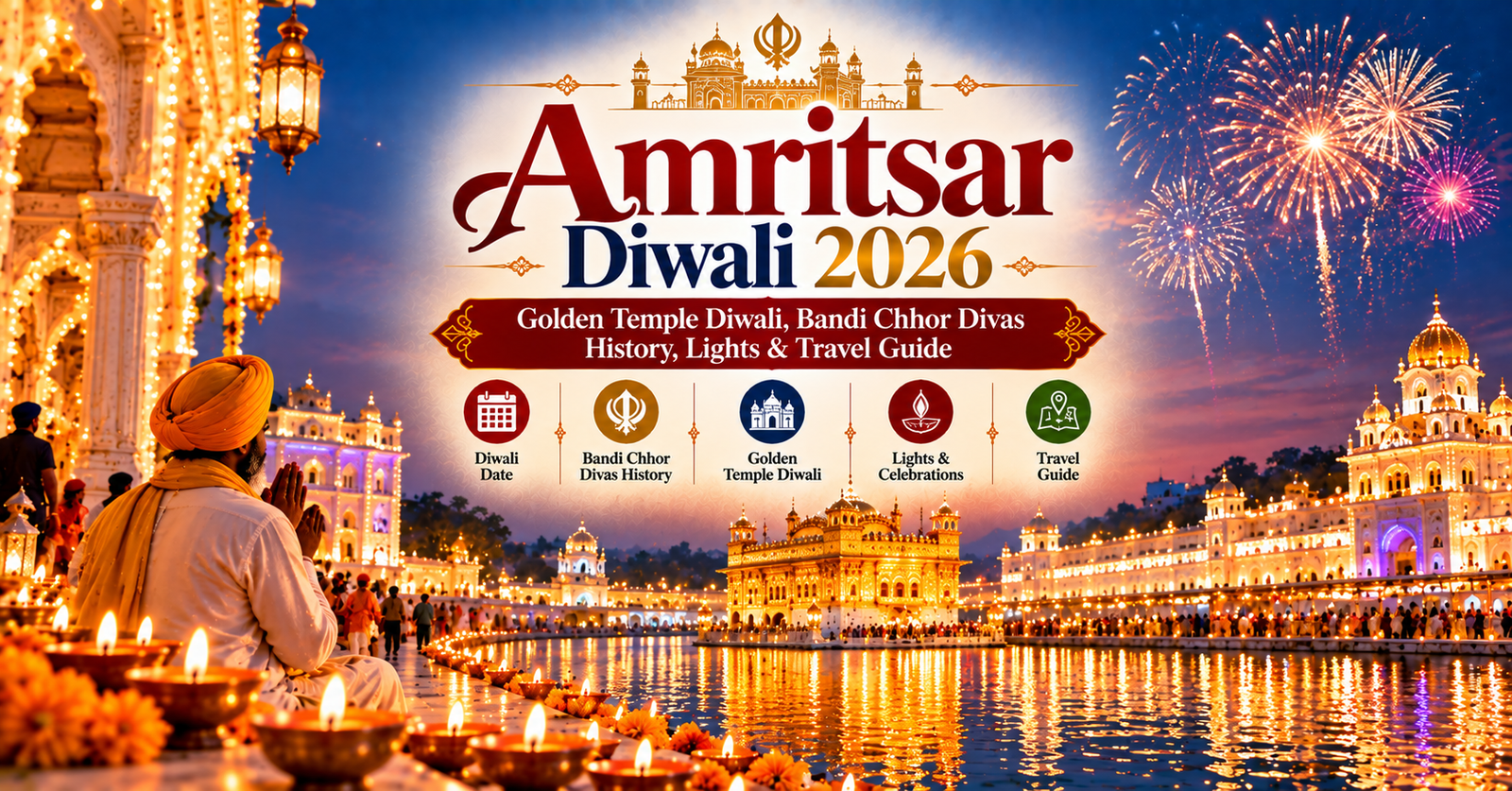
| Amritsar, Punjab | Bandi Chhor Divas at the Golden Temple, which is lit with thousands of lights, with fireworks, kirtan and langar. | Sunday, 8 November |
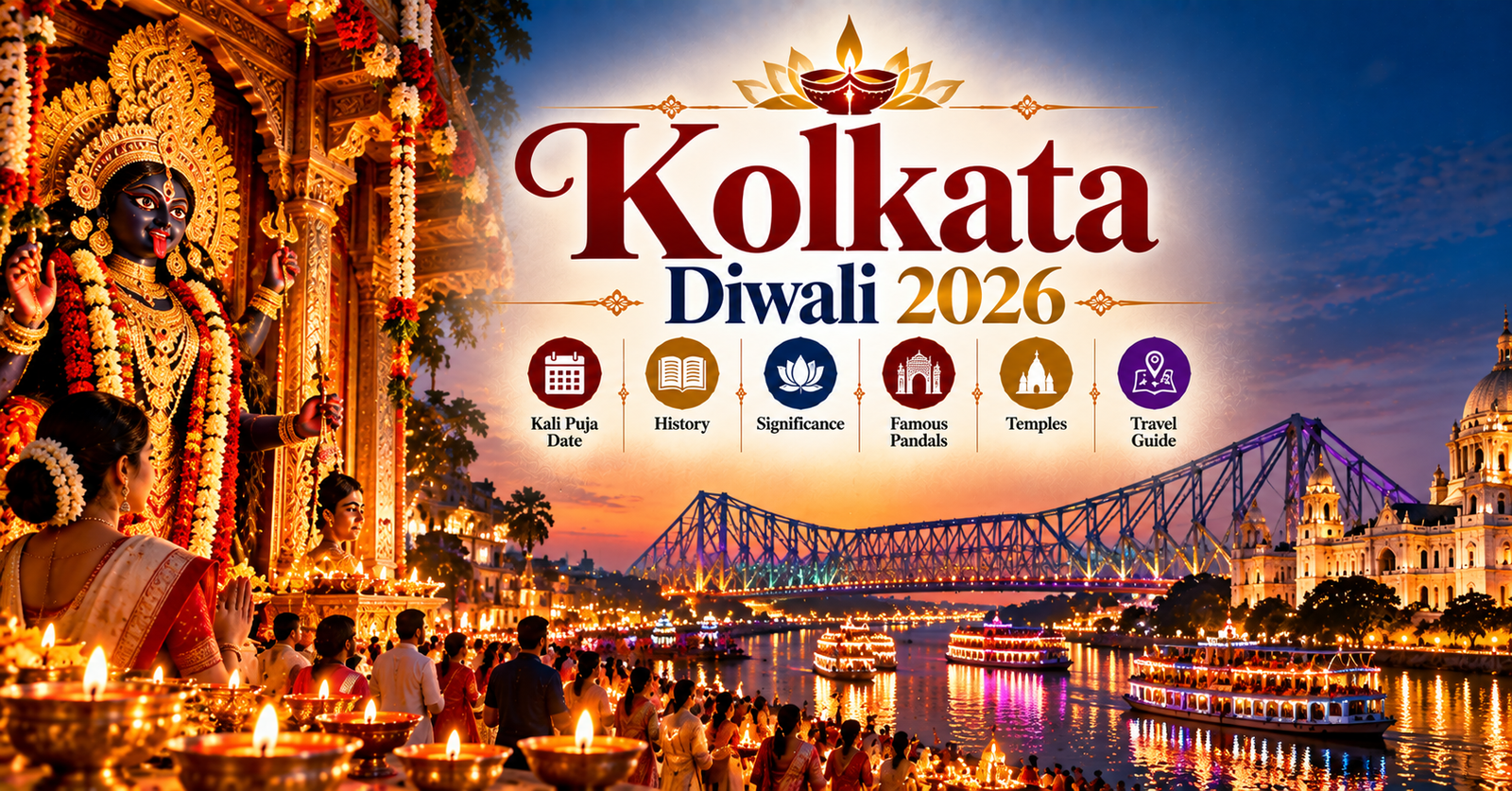
| Kolkata, West Bengal | Kali Puja at night in pandals and at Kalighat and Dakshineswar temples. | Night of Sunday, 8 November |
| Goa | Narakasura effigies are burnt on Naraka Chaturdashi. | Dawn of the Naraka Chaturdashi observance |
| Mathura, Vrindavan and Govardhan | Govardhan Puja and Annakut. | Tuesday, 10 November |
| Nathdwara, Rajasthan | Annakut at the Shrinathji temple. | Tuesday, 10 November |
| Pawapuri, Bihar | Jain pilgrims gather at the place of Mahavira's nirvana. | Sunday, 8 November |
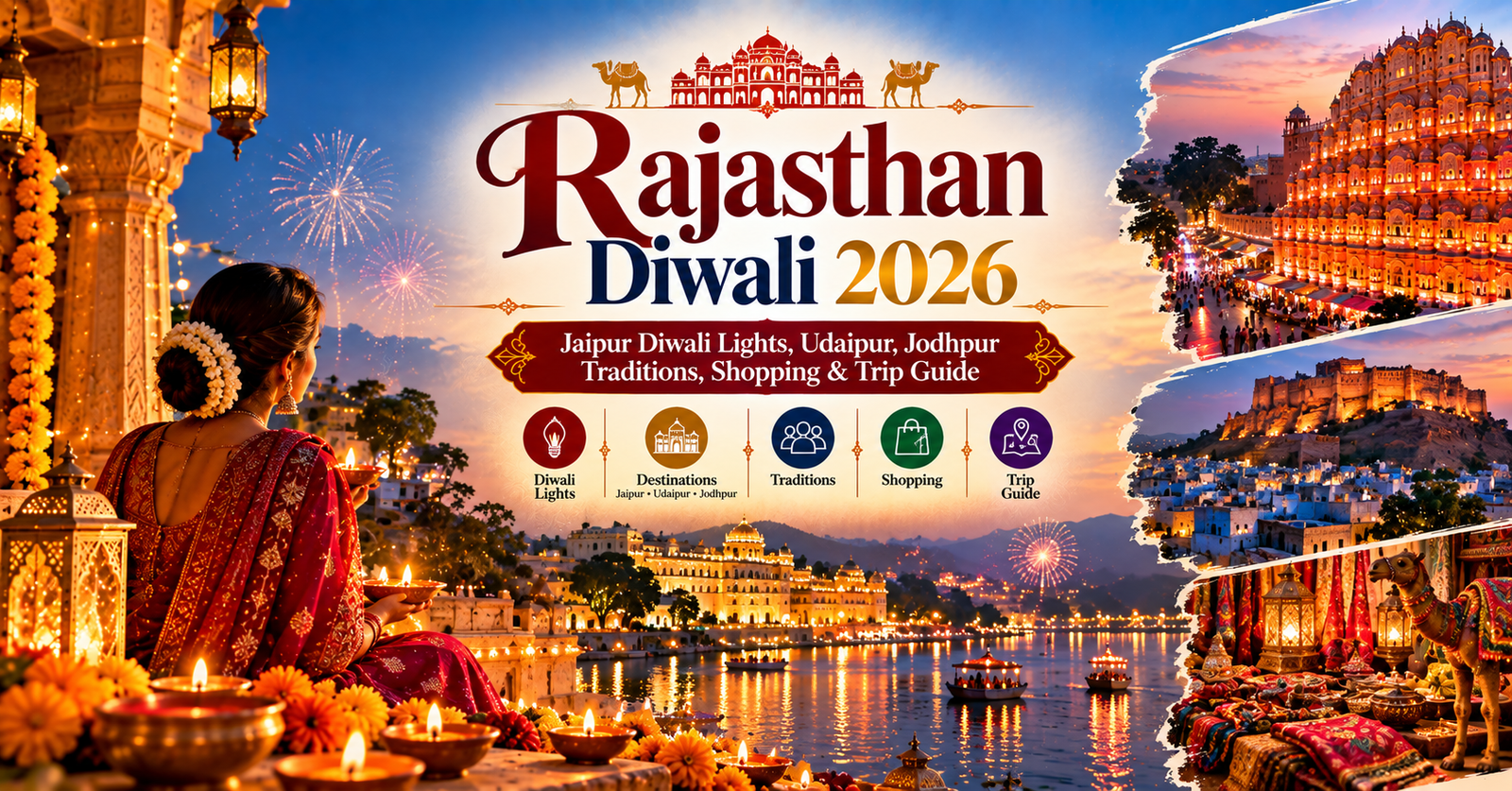
| Jaipur, Rajasthan | The old city's markets are known for their Diwali illumination. | 6 to 8 November |
How to Choose Among the Best Places to Celebrate Diwali in India
- For the Ramayana connection: Ayodhya.
- For lamps on a river: Ayodhya on 7 November, or Varanasi on 24 November.
- For Sikh tradition: Amritsar.
- For Shakti worship: Kolkata.
- For Krishna tradition: Mathura and Vrindavan on 10 November.
- For a two-city trip: Ayodhya for Deepotsav and Diwali, then Varanasi. We arrange this by cab, with station or airport pickup in Ayodhya.
Whichever of the best places to celebrate Diwali in India you choose, book early. The festival falls on a weekend in 2026, from Friday, 6 November to Sunday, 8 November.
Diwali in Ayodhya: A Local Note
Ayodhya is where the story of Diwali ends and the festival begins. Deepotsav is held on the evening before Diwali, on the ghats of the Saryu around Ram Ki Paidi, and Diwali itself is kept on 8 November in homes and temples across the city.
- Darshan at the Ram Mandir is free, and every pass is issued free by the Trust through its official portal.
- Full details are in our Ayodhya Deepotsav 2026 guide, the world record diyas article and the Ram Ki Paidi laser show guide.
- Roads near the ghats are restricted on Deepotsav day. A pre-booked cab in Ayodhya to the permitted point and an e-rickshaw for the inner roads are the practical way to move.
- Arriving by train or flight? Book the railway station pickup or airport transfer in advance.
- Stay and darshan plans are on our Ayodhya tour packages page, and the two-city option is the Ayodhya Varanasi package.
Guests coming only for Deepotsav evening often take a same-day plan from our packages, with an airport pickup or station pickup added.
Call or WhatsApp Your Travel Partner on +91 78811 55800. Rooms and vehicles for 6 to 9 November fill early, so share your dates as soon as they are fixed.
A Safe and Clean Diwali
| Do | Do not |
|---|---|
| Place lamps on a steady surface, away from curtains | Do not leave lit lamps unattended when you go out |
| Keep a bucket of water or sand where fireworks are used | Do not let children light fireworks alone |
| Wear cotton clothes near flames | Do not wear loose synthetic clothing near lamps or fireworks |
| Follow the local rules on firecrackers | Do not relight a firework that has failed |
| Keep pets indoors in a quiet room | Do not burst crackers near hospitals, animals or the elderly |
| Use earthen lamps and natural rangoli colours | Do not leave waste on the street the next morning |
- Firecracker rules change by year and by city. In October 2025, for example, the Supreme Court permitted the sale and use of green firecrackers in Delhi-NCR from 18 to 21 October under conditions. Check the order that applies in your city for 2026 before buying.
- In case of a burn, cool the area under running water and seek medical help. The national emergency number is 112.
- Plan your movement. In Ayodhya on Deepotsav evening, walk or use an e-rickshaw, and keep your cab at the permitted parking point.
- Buy earthen lamps from local potters. The Union Culture Minister named potters, artisans, farmers and sweet makers among those who keep the festival alive.
What Comes After Diwali in 2026
| Festival | Date |
|---|---|
| Govardhan Puja | 10 November |
| Bhai Dooj | 11 November |
| Chhath Puja | 13 to 16 November |
| Dev Deepawali, Varanasi | 24 November |
Planning a longer stay? Our packages can cover Diwali in Ayodhya and Dev Deepawali in Varanasi, with an e-rickshaw for local darshan. See our guides to Chhath Puja 2026 and Dev Deepawali Varanasi 2026.
Frequently Asked Questions
1. Diwali 2026 kab hai?
Diwali 2026 is on Sunday, 8 November 2026. The five-day festival runs from Dhanteras on 6 November to Bhai Dooj on 11 November.
2. What is the exact Diwali 2026 date and tithi?
The Diwali 2026 date is 8 November. Kartik Amavasya begins at about 11:27 AM on 8 November and ends at about 12:31 PM on 9 November.
3. What is the Lakshmi Puja time on Diwali 2026?
For New Delhi, the published Lakshmi Puja window on 8 November 2026 is about 5:55 PM to 7:50 PM. The time varies by city.
4. What are the 5 days of Diwali?
The 5 days of Diwali are Dhanteras, Naraka Chaturdashi, Lakshmi Puja, Govardhan Puja and Bhai Dooj.
5. When is Dhanteras in 2026?
Dhanteras is on Friday, 6 November 2026.
6. When is Naraka Chaturdashi in 2026?
Naraka Chaturdashi, or Chhoti Diwali, is on Saturday, 7 November 2026. The pre-dawn oil bath is listed for the morning of 8 November, because Chaturdashi continues until late morning that day.
7. When is Govardhan Puja in 2026?
Govardhan Puja is on Tuesday, 10 November 2026.
8. When is Bhai Dooj in 2026?
Bhai Dooj is on Wednesday, 11 November 2026.
9. Why is there a gap between Diwali and Govardhan Puja in 2026?
Amavasya ends at about 12:31 PM on 9 November, so Pratipada is observed on 10 November. Monday, 9 November is a gap day.
10. Diwali kya hai?
Diwali is the festival of lights, kept on the new-moon night of Kartik with rows of lamps, Lakshmi Puja, sweets and family gatherings.
11. What is the Diwali meaning?
Diwali comes from the Sanskrit Dipavali, which means a row of lights.
12. Is Deepavali the same as Diwali?
Yes. Deepavali is the name used in South India and several other countries, and it is the name under which UNESCO has listed the festival.
13. Diwali kyun manayi jati hai?
Most Hindus associate it with Shri Ram's return to Ayodhya. It is also linked with Krishna's defeat of Narakasura, the worship of Lakshmi, Kali Puja, Mahavira's nirvana for Jains and Bandi Chhor Divas for Sikhs.
14. Diwali kaise manate hain?
People clean and decorate their homes, perform Lakshmi and Ganesh puja in the evening, light rows of lamps, wear new clothes and share sweets and gifts.
15. How old is Diwali history in written records?
It is mentioned in the Padma Purana and the Skanda Purana and in Harsha's 7th-century play Nagananda, so written references go back well over a thousand years.
16. When was Deepavali added to the UNESCO list?
Deepavali was inscribed on UNESCO's Representative List of the Intangible Cultural Heritage of Humanity on 10 December 2025.
17. Which are the best places to celebrate Diwali in India?
Ayodhya for Deepotsav, Varanasi, Amritsar for Bandi Chhor Divas, Kolkata for Kali Puja, Goa for Naraka Chaturdashi, and Mathura and Vrindavan for Govardhan Puja.
18. When is Ayodhya Deepotsav in 2026?
Deepotsav is on Saturday, 7 November 2026, the evening before Diwali.
19. Why do Sikhs celebrate Diwali?
Sikhs observe Bandi Chhor Divas, which marks the release of Guru Hargobind from Gwalior Fort along with 52 kings.
20. Why do Jains celebrate Diwali?
Jains commemorate the nirvana of Bhagwan Mahavira, the 24th Tirthankara, at Pawapuri.
21. What are the main Diwali traditions?
Lighting lamps, cleaning the home, rangoli, Lakshmi Puja, new clothes, sweets, gifts and, for traders, the worship of new account books.
22. What is the Diwali significance for families?
It is a time of renewal. Homes are cleaned, families gather, accounts are settled and a new beginning is marked with light.
23. How is Diwali celebration in India different in the south?
In Tamil Nadu, Karnataka and Goa the main observance is Naraka Chaturdashi at dawn, with an oil bath before sunrise.
24. Are firecrackers allowed on Diwali 2026?
Rules differ by city and year. Check the order issued by the court or the local administration for your city before buying or using firecrackers.
25. When is Diwali in 2027?
Diwali in 2027 is computed to fall on 29 October.
Conclusion
To answer "Diwali 2026 kab hai" one last time: Diwali 2026 is on Sunday, 8 November, with Dhanteras on 6 November, Naraka Chaturdashi on 7 November, Govardhan Puja on 10 November and Bhai Dooj on 11 November. Behind the dates, Diwali meaning comes down to a simple idea that has lasted for more than a thousand years: on the darkest night, light a lamp. Whether you remember Shri Ram's return, welcome Lakshmi, worship Kali, honour Mahavira or mark Bandi Chhor Divas, the lamp is the same.
If you would like to spend this Diwali where the story began, we are in Ayodhya and glad to help. Call or WhatsApp Your Travel Partner on +91 78811 55800 for a Deepotsav and Diwali package, a cab, a station transfer, an airport transfer or an e-rickshaw for the temple zone. Shubh Deepavali.
Official and Useful Links
- UNESCO: Deepavali inscribed on the Representative List
- Ministry of Culture, Government of India
- Incredible India
- Uttar Pradesh Tourism
- Shri Ram Janmabhoomi Teerth Kshetra Trust
- Ministry of AYUSH
- Central Pollution Control Board
Our Services in Ayodhya
Disclaimer: Festival dates and muhurat follow published panchang calculations for New Delhi and may differ by a few minutes in other cities. Please confirm with your local panchang or priest. Event schedules and firecracker rules are decided by the authorities and can change.