Vivah Panchami 2026: Ram Vivah in Ayodhya and Janakpur
Vivah Panchami 2026 is on Monday, 14 December. Tithi timing, how Ayodhya and Janakpur celebrate Ram Vivah, route, documents and a 3-day trip plan.
Quick answer: Vivah Panchami 2026 is on Monday, 14 December. The Panchami tithi ends at about 7:16 PM, and the sun rises at about 6:41 AM in both Ayodhya and Janakpur. Janakpur in Nepal holds the largest celebration with a seven-day festival and a staged wedding. Ayodhya marks the day in its temples. The two towns are roughly 450 to 500 km apart by road, so most visitors choose one town for the day or plan a three- to four-day trip that includes both.
Checked on 22 October 2026. The tithi time follows published panchang listings in Indian Standard Time. Sunrise and sunset are our own calculation. Festival schedules in Janakpur and Ayodhya are announced locally and often not until a few weeks before, so please confirm them before booking non-refundable travel.
This is a trip-planning guide. It explains what happens in each town, how to travel between them, what documents to carry, and how to fit the trip into three or four days. For the Ayodhya side of your trip, our Ayodhya 2-day itinerary and Ram Mandir tour package cover the sights in detail.
Vivah Panchami 2026 Date and Timings
| Detail | 2026 |
|---|---|
| Festival | Vivah Panchami (Ram-Sita Vivah) |
| Date | Monday, 14 December 2026 |
| Hindu month and paksha | Margashirsha Shukla Paksha, Panchami tithi |
| Panchami ends | About 7:16 PM, 14 December |
| Sunrise in Ayodhya and Janakpur | About 6:41 AM |
| Sunset in Ayodhya and Janakpur | About 5:09 PM |
The tithi covers the whole daylight period, so there is no confusion about the date in India. In Nepal the local calendar can sometimes place the festival a day apart from the Indian listing, so check the Janaki Mandir announcement for the day of the main wedding ritual.
What Vivah Panchami Celebrates
The festival marks the wedding of Ram and Sita on the fifth day of the bright half of Margashirsha, which falls in November or December. The wedding is traditionally placed in Janakpur, the former capital of Mithila and the home of King Janak. Temples hold a symbolic wedding of the Ram and Sita idols, and many devotees read the wedding section of the Ramcharitmanas. Many fast, and sweets are offered to the divine couple.
Vivah Panchami in Ayodhya
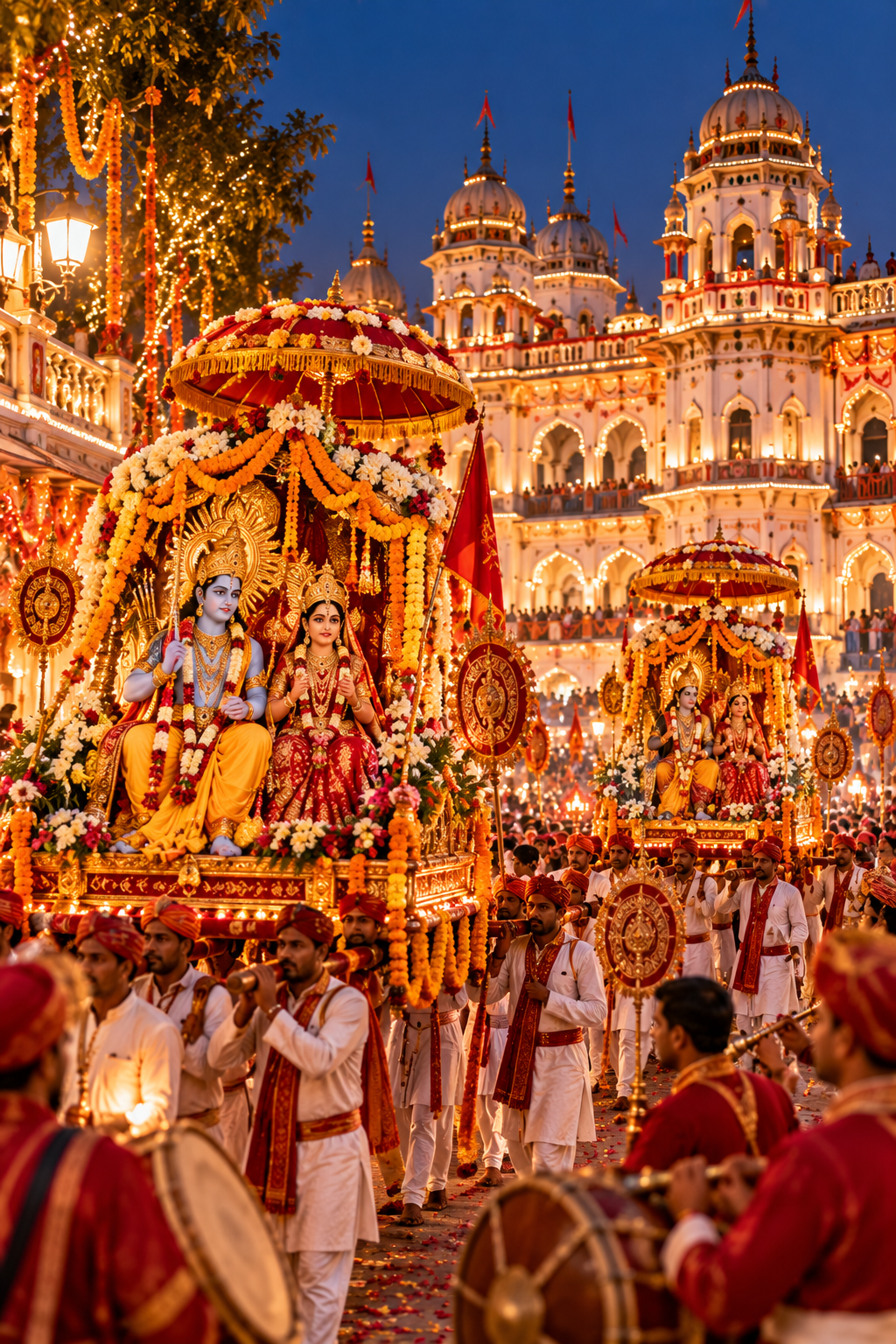
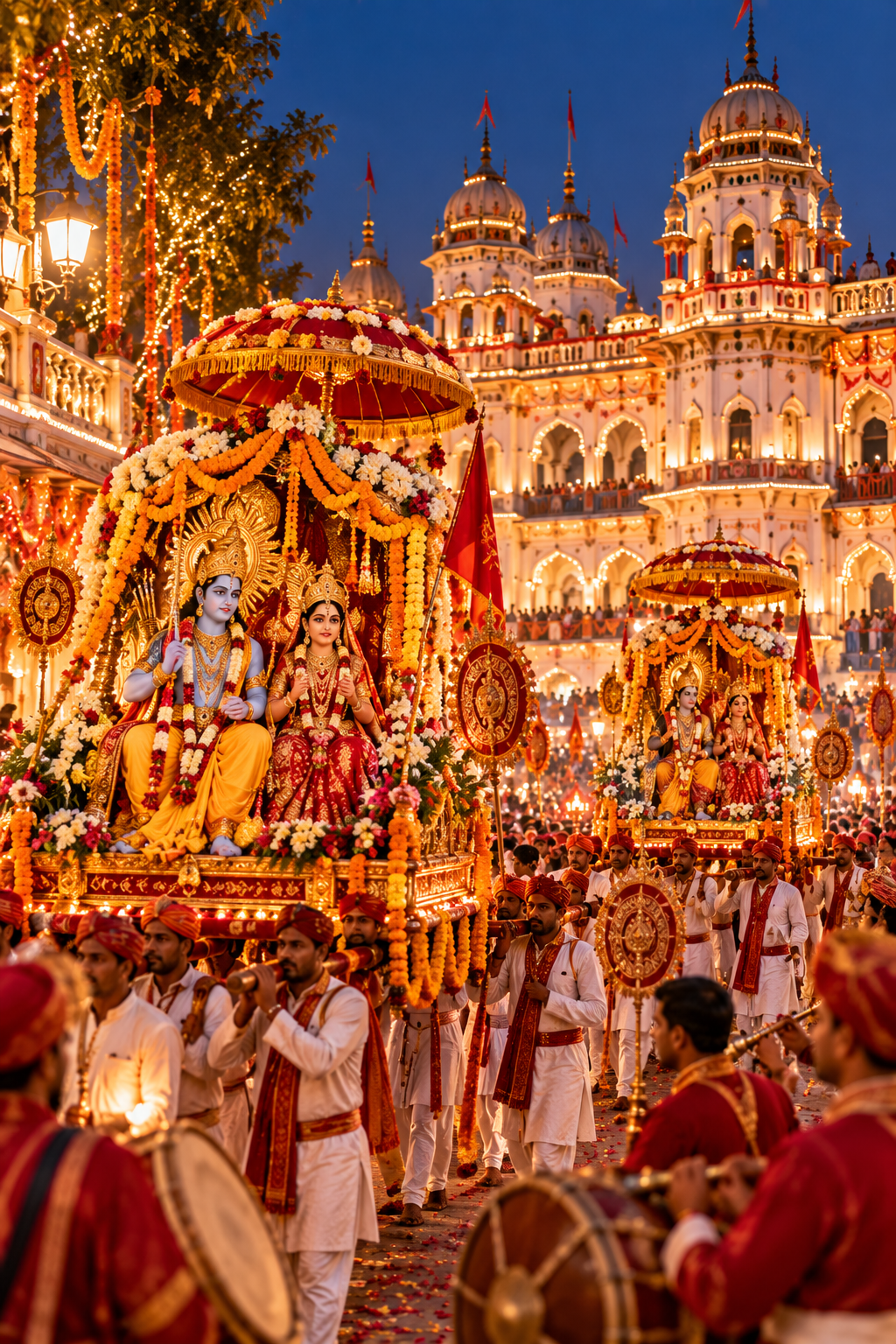
Ayodhya is Ram's birthplace and the town where the Ram-Sita wedding is celebrated in its temples, with processions and devotional programmes. It is usually a temple-centred observance, not the multi-day staged festival seen in Janakpur. Two recent examples show how the day is used:
- In 2025, Vivah Panchami was the date chosen for the Dharma Dhwaja flag-hoisting at the Ram Mandir, a ceremony held during Abhijit Muhurta.
- In 2024, reports described a tilak ceremony in Ayodhya with gifts sent from Janakpur, and a Ram baraat procession travelling from Ayodhya to Janakpur, organised by the Vishwa Hindu Parishad.
Neither of these means the same events will be repeated in 2026. Ayodhya's programme for the day is normally finalised by temple trusts and local organisers close to the date. Check the announcements from the Shri Ram Janmabhoomi Teerth Kshetra and the major temples such as Kanak Bhawan, and plan darshan for the morning rather than the evening.
Vivah Panchami in Janakpur
Janakpur, in the Dhanusha district of Madhesh Province in Nepal, is where the wedding is staged each year. The festival is described as a seven-day event that culminates on Vivah Panchami. A 2019 report listed it as running from 26 November to 2 December, with the wedding on the sixth day, which suggests that in 2026 the festival will begin around 9 December. Treat that as an estimate based on the older pattern, not as an announced date.
The sequence reported by Nepali and travel sources is:
- Nagar Parikrama: A procession through the city, with a couple dressed as Ram and Sita.
- Fulbari Lila: A re-enactment of Ram and Sita's first meeting in the garden.
- Tilakotsav: The ceremony in which the groom's side is formally welcomed.
- Dhanush Yagya: The breaking of Shiva's bow by Ram.
- Matkor: A Mithila ritual in which women dig earth for the wedding altar.
- Swayambhar (the wedding): On Vivah Panchami, idols of Ram from the Ram Mandir and Sita from the Janaki Mandir are carried in decorated palanquins to the Bahrabigha ground, where the marriage is performed.
- Ramkaleva: The hosting and farewell ritual, with songs and banter between the two families.
The festival is organised by the Janaki Mandir. Organisers in 2019 expected about 1.5 million devotees over the festival, and hundreds of sadhus travel from India. That figure is the organisers' expectation for one year and not a count, but it shows the scale. Expect heavy crowds around the Janaki Mandir and the Bahrabigha ground on the wedding day.
Ayodhya or Janakpur: Which One for You?
| If you want | Choose |
|---|---|
| To see the wedding festival itself | Janakpur |
| Ram Mandir darshan and a shorter trip | Ayodhya |
| Fewer crowds and easier logistics | Ayodhya, in the morning |
| The full Ram-Sita story across two places | Both, over three or four days |
Ayodhya to Janakpur: Route and Travel Time
There is no quick way between the two towns. By road, Sitamarhi is about 400 km from Ayodhya and takes around nine hours by cab, according to route planners. Janakpur is beyond Sitamarhi, across the border, so a realistic total is 450 to 500 km. Sources give different numbers, so plan a full day with a tea stop, border time and traffic. Do not plan to arrive after dark if you can avoid it.
- By road: The usual route is through Bihar to the Sitamarhi side and across the border into Nepal. A reliable driver who has done the crossing before saves time.
- By train and road: A train runs between Ayodhya and Jaynagar and takes more than 14 hours, according to travel planners. Darbhanga, about 64 to 79 km from Janakpur, is the nearest large Indian rail and air hub.
- By air: Janakpur has its own small airport. Flying is possible via Kathmandu or Bhairahawa, but it is not faster than the road for most Ayodhya travellers.
If you want a driver for this route, see our Ayodhya cab service page and ask about the border crossing before you book. Many Indian taxis cannot continue into Nepal without separate paperwork, so confirm this when you ask for a quote.
Documents and Border Rules for Indian Travellers
Indian citizens do not need a visa for Nepal. For land travel, travel guides say a photo ID such as a Voter ID card or Aadhaar card is accepted at the border, and recommend carrying two valid IDs. A passport is recommended for air travel. Carry original documents and keep photocopies. Children should carry their own ID as well. These requirements are summarised from a travel guide and may change, so confirm the latest on the Indian Embassy in Kathmandu website before you go.
- Keep your documents in a pouch you can reach easily, not in the main bag.
- Carry small-denomination cash and check the current Nepal rules on Indian currency notes before you cross.
- Ask your hotel in Janakpur whether they accept cards or UPI payments, as many local shops do not.
- Charge your phone, and download offline maps, since signal can be patchy at the border.
A 3-Day Plan Covering Both Towns
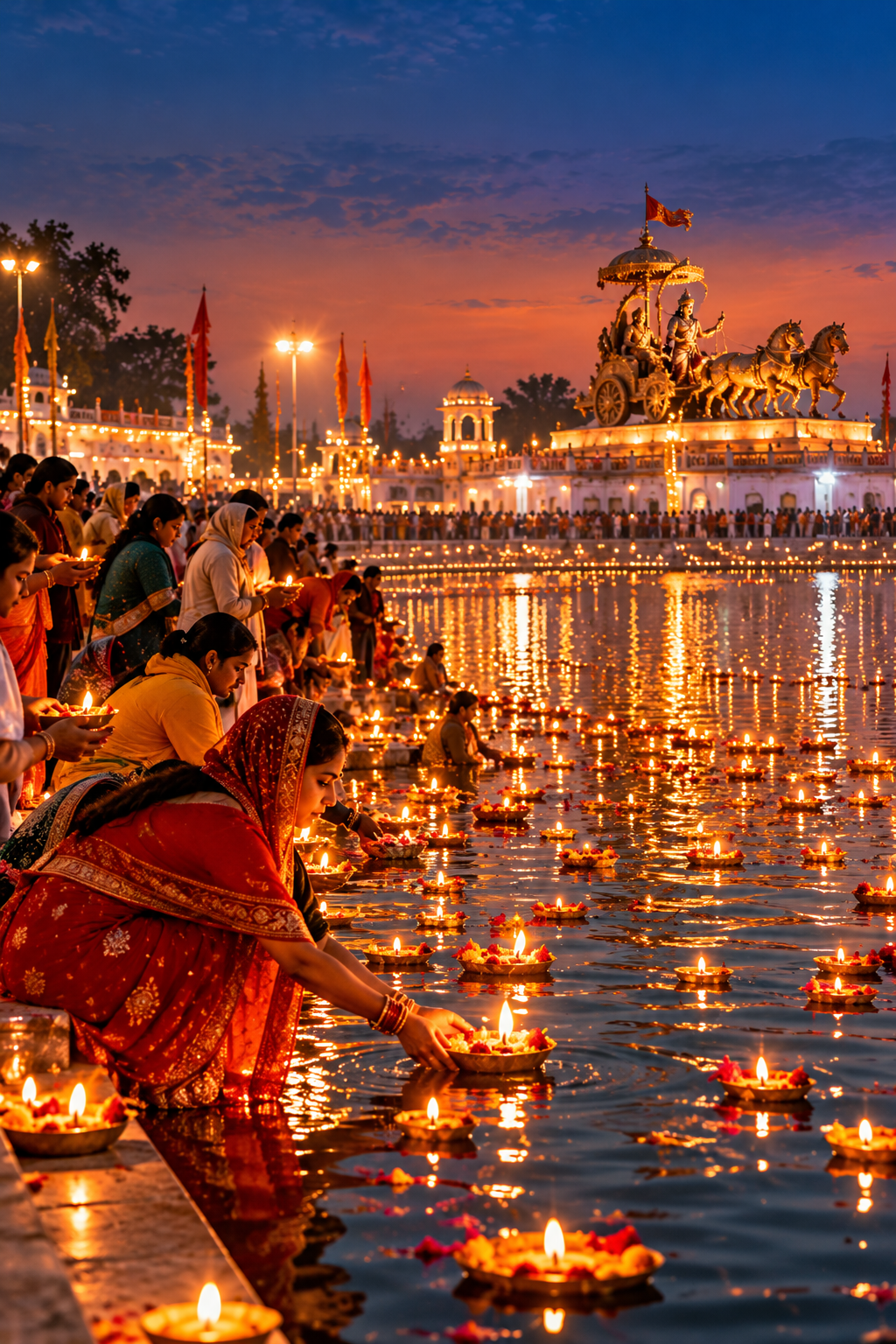
- Saturday 12 December, Ayodhya: Arrive, rest and do an evening visit to Ram Ki Paidi and the Saryu aarti. Read our one-day Ayodhya tour for a route.
- Sunday 13 December, Ayodhya to Janakpur: Do Ram Mandir darshan early, then leave by mid-morning for the long drive. Check into your hotel in Janakpur before dark.
- Monday 14 December, Janakpur: Spend Vivah Panchami at the Janaki Mandir and the festival. Go early, keep the afternoon free, and expect the wedding procession late in the day.
- Tuesday 15 December: Return towards Ayodhya or fly out from Janakpur or Darbhanga.
If you only have two days, pick one town. A rushed Ayodhya to Janakpur dash in a single day leaves little time at either place. For help with Ayodhya timing and queues, our guides to Ram Mandir parking and station to Ram Mandir transport are useful.
December Weather and Practical Tips
- December mornings in the Gangetic plain and Terai are cold, and fog can delay trains and slow road travel. Add a buffer on the day you travel.
- Book Janakpur accommodation early, because a large share of the city's rooms fill up during the festival week.
- Dress modestly and be ready to remove footwear at temples.
- Keep children and elders close in the crowds, and fix a meeting point with your group.
- Do not give your documents or money to anyone who offers to arrange a darshan or a border crossing for a fee.
Vivah Panchami at Home
If you cannot travel, the day can be observed at home. Place an image of Ram and Sita on a clean cloth, offer flowers and sweets, and read the wedding passages of the Ramcharitmanas. Fasting is optional. People with health conditions should not fast without medical advice.
The Belief About Weddings on This Day
In many families, especially in the Mithila region, people avoid fixing a wedding on Vivah Panchami. The explanation usually given is that Sita is said to have faced a hard life after her marriage, so families do not want to repeat the day. This is a popular belief and not a rule of the scriptures, and practice differs between families and regions.
Common Mistakes to Avoid
- Assuming the Janakpur festival is a one-day event and arriving only on 14 December with no room booked.
- Planning to drive from Ayodhya to Janakpur and back in one day.
- Taking an Indian taxi to the border without confirming whether it can enter Nepal.
- Leaving the border crossing for the evening, when traffic and checks are slower.
- Relying on one website for festival times. Schedules are announced locally.
Frequently Asked Questions
When is Vivah Panchami in 2026?
Vivah Panchami 2026 is on Monday, 14 December. Shukla Panchami of Margashirsha ends at about 7:16 PM on that day, so it is clearly the Panchami at sunrise.
Where is Vivah Panchami celebrated the most?
Janakpur in Nepal, the traditional home of Sita, has the biggest celebration, built around a multi-day festival and a re-enactment of the wedding. Ayodhya marks the day in its temples with Ram-Sita Vivah utsav, and the day was also the date of the Ram Mandir flag-hoisting in 2025.
Do I need a passport to go from Ayodhya to Janakpur?
For travel by land, travel guides say Indian citizens can cross with a photo ID such as a Voter ID or Aadhaar, and recommend carrying at least two valid IDs. Rules can change and are checked at the border, so confirm with the Indian Embassy in Kathmandu before you leave.
How far is Janakpur from Ayodhya?
By road it is roughly 450 to 500 km depending on route, which means a full day of travel. Sitamarhi, the last big town on the Indian side, is about 400 km from Ayodhya, and Janakpur is a short way beyond the border.
How many days does the Janakpur festival last?
It is usually described as a seven-day festival that builds up to the wedding re-enactment on Vivah Panchami and ends with a hosting ritual called Ramkaleva. Exact dates are announced locally each year, so check with the Janaki Mandir committee.
Is Vivah Panchami a good day for a wedding?
Many families avoid holding weddings on this day. The popular explanation links it to the difficult life Sita is said to have had after her marriage. This is a belief and not a rule, and families who follow a different tradition may choose differently.
Can I do Ram Sita puja at home on Vivah Panchami?
Yes. Many families put an image of Ram and Sita on a clean cloth, offer flowers and sweets, and recite the wedding episode of the Ramcharitmanas. Fasting is optional.
Is it better to visit Ayodhya or Janakpur for Vivah Panchami?
Choose Janakpur if you want to see the wedding festival itself. Choose Ayodhya if you want Ram Mandir darshan and a shorter trip. If you have three or four days, you can do both, with a long road day between them.
Sources and Method
The date and tithi come from the Haindavam panchang listing. Janakpur festival details come from a Kathmandu Post report on the 2019 festival, a Nepal Traveller article and a BuddhaAir festival guide, and the Ayodhya events come from a Punjab Kesari report on the 2025 flag-hoisting and a Swarajya report on the 2024 preparations. Distances come from route planners that disagree with each other, so we give ranges. Border rules come from a travel guide and should be checked with the Indian Embassy in Kathmandu. Sunrise and sunset are our calculation. We update this post when the 2026 programme is announced.