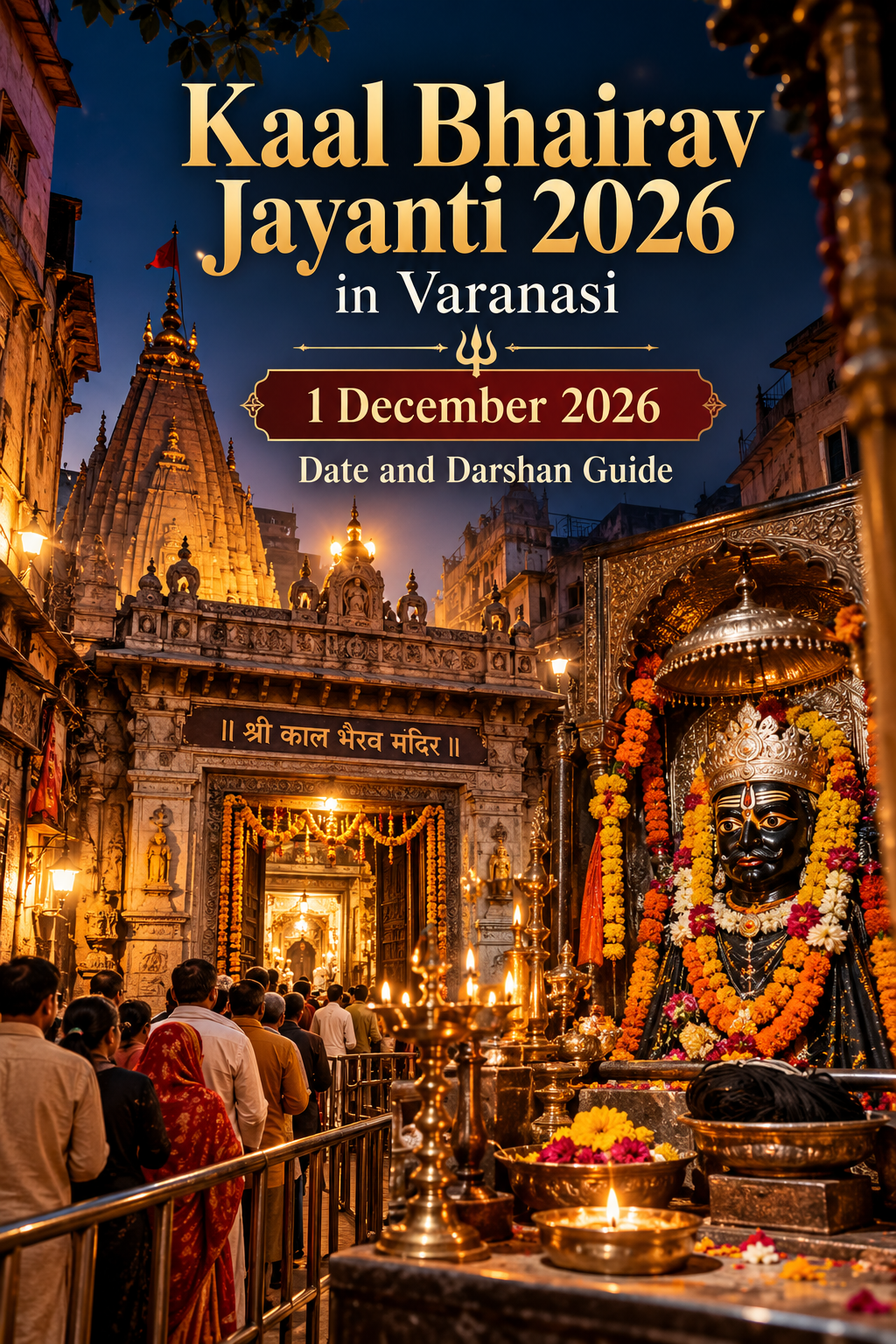
Kaal Bhairav Jayanti 2026 in Varanasi: Date and Darshan
Kaal Bhairav Jayanti 2026 is on Tuesday, 1 December. Ashtami tithi timings, Kaal Bhairav Mandir Varanasi darshan plan, offerings, crowd tips and Kashi route.
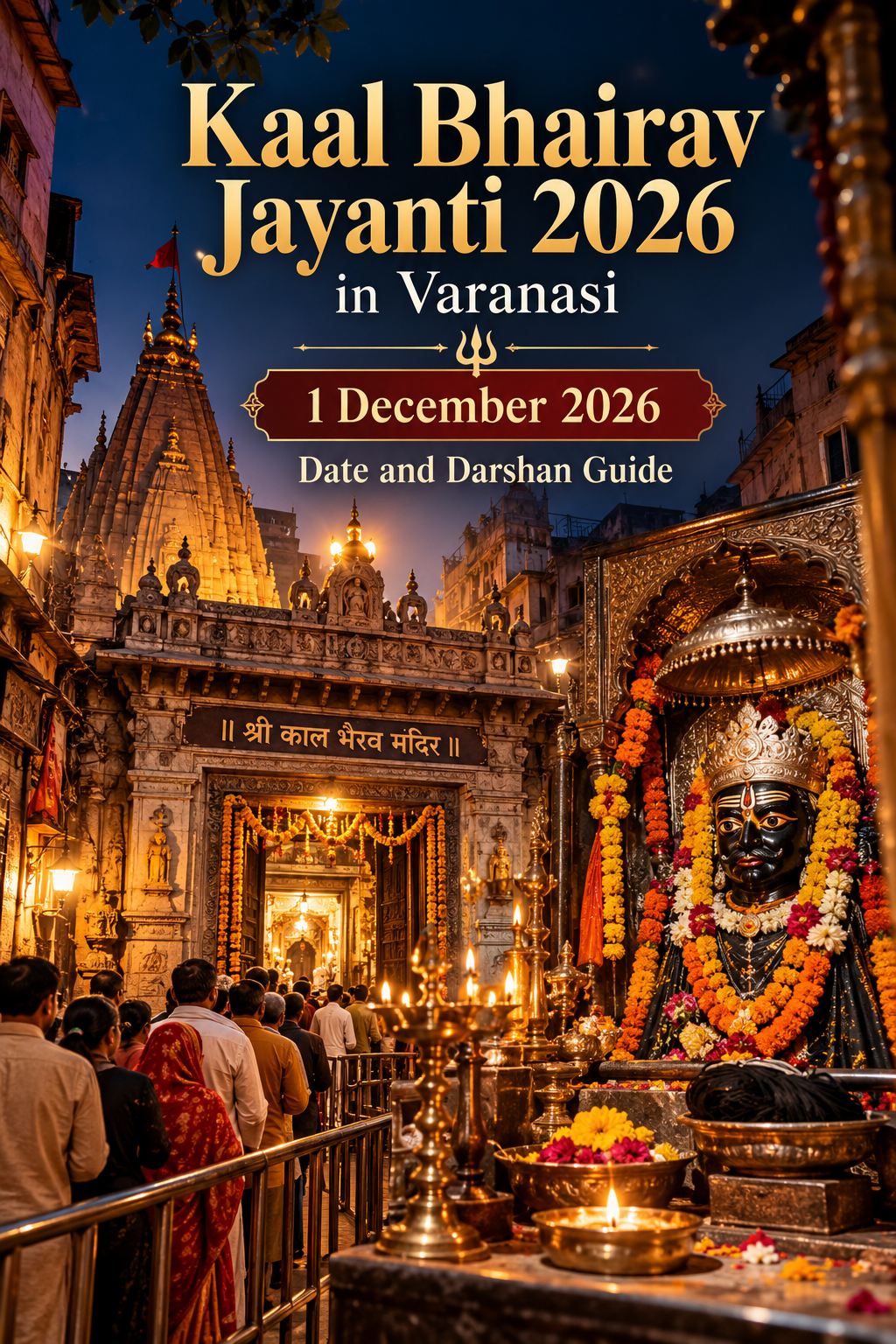
Quick answer: Kaal Bhairav Jayanti 2026 is on Tuesday, 1 December. In Varanasi the sun rises at about 6:26 AM and sets at about 5:07 PM that day, and Krishna Ashtami lasts from about 12:12 AM to 11:14 PM. The main place to be is the Kaal Bhairav Mandir in the Bhaironath area of the old city, where the Kotwal of Kashi is worshipped.
Checked on 22 October 2026. The tithi times come from published panchang listings and are shown in Indian Standard Time. Sunrise and sunset for Varanasi are our own calculation and can differ by a minute or two from your local panchang. Temple timings change on festival days, so confirm them before you leave.
Most pages on this festival explain the story and then stop. This one is a planning guide for people who want to be in Varanasi on the day: when the tithi starts and ends, how the temple day usually runs, what to carry, how to fit it around Kashi Vishwanath darshan, and what to expect from the crowd. If you are also planning Dev Deepawali a week earlier, see our Dev Deepawali Varanasi guide.
Kaal Bhairav Jayanti 2026 Date and Tithi
| Detail | 2026 |
|---|---|
| Festival | Kaal Bhairav Jayanti (Kalabhairav Jayanti, Bhairav Ashtami) |
| Date | Tuesday, 1 December 2026 |
| Hindu month and paksha | Margashirsha Krishna Paksha (Kartik in the Amanta calendar) |
| Ashtami tithi starts | About 12:12 AM, 1 December |
| Ashtami tithi ends | About 11:14 PM, 1 December |
| Varanasi sunrise | About 6:26 AM |
| Varanasi sunset | About 5:07 PM |
Ashtami covers almost the whole of 1 December, so the daytime darshan and puja are clearly on Tuesday. Because the tithi ends at about 11:14 PM, the hours after midnight on the night of 1 and 2 December fall in Navami. If you want to join a late-night or midnight programme, ask the temple or a local priest which night it will be held, since traditions differ. Tuesday is also a day many devotees consider especially suited to Bhairav worship.
Every Krishna Paksha Ashtami is observed as Kalashtami. The Ashtami in Margashirsha is the one marked as Kaal Bhairav Jayanti, the day the fierce form of Shiva is said to have appeared.
Why Kaal Bhairav Is Called the Kotwal of Kashi
In the account told in Shaiva tradition, Brahma and Vishnu argued over who was greater. Shiva appeared as a pillar of light, and Brahma falsely claimed to have found its top. Shiva then manifested Bhairav, who cut off Brahma's fifth head. The head stuck to his hand and the sin of brahmahatya followed him until he reached Kashi, where the head fell at a place called Kapal Mochan Tirth. Shiva then decreed that Bhairav would stay in Kashi as its guardian, the Kotwal, who removes the sins of his devotees.
These are traditional accounts and not documented history. What is documented is that the temple is one of the oldest Shiva shrines in the city, that the present structure is usually dated to around the mid-17th century, and that Bhairav Ashtami is one of its major festivals along with Mahashivratri and Annakoot.
Kaal Bhairav Mandir Varanasi: What to Know Before You Go
- Where: Bhaironath, Visheshwarganj, in the old city. Lanes around it are narrow and crowded on festival days.
- The deity: A silver-faced image of Kaal Bhairav, seated on a dog and holding a trident. Only the garlanded face is normally visible through the sanctum door. A separate icon of Kshetrapal Bhairav is at the rear door.
- Timings: The tourism board lists 5:00 AM to 10:00 PM, with possible closures at midday for bhog and rest. Local guides describe a morning session, an afternoon break and an evening session. They do not agree to the minute.
- Aarti: Reported times are an early morning Mangala aarti, an evening Sandhya aarti and a late-night Shayan aarti. Treat these as approximate.
- Busy days: Tuesdays and Sundays are the usual busy days, and Bhairav Ashtami is the busiest of all.
- Raksha sutra: Many devotees take a protective thread, often called the Bhairav raksha sutra, tied at the wrist after darshan.
At a past festival at the same temple, the Hariyali Shringar of September 2023, the shringar was done at 5 AM, darshan opened after it, the temple closed after the afternoon shayan aarti and reopened at 2:30 PM, and queues of devotees continued late into the night. Expect the same pattern on Jayanti: an early start, a long middle of the day, and a long queue in the evening.
How to Plan 1 December in Varanasi
- Arrive the day before. Reach Varanasi on 30 November and stay in the old city or near Godowlia, Maidagin or Chowk so you can reach the lanes on foot.
- Go early. The least crowded hours are right after the temple opens. Aim to be in the queue shortly after sunrise, which is about 6:26 AM.
- Do Kashi Vishwanath darshan first if you follow custom. Then move to Kaal Bhairav. Allow extra travel time in the lanes, since it is a few kilometres between the two and vehicles are stopped well short of both.
- Keep the middle of the day light. This is when many families rest or visit the ghats. Remember the temple may close for a break.
- Plan the evening. The Ashtami tithi runs until about 11:14 PM, so an evening darshan after sunset at about 5:07 PM is possible. The queue will be longest at this time.
- Do not plan a tight onward journey. Keep 2 December free for travel in case the day runs long.
If you would like a driver who knows the lanes, drop-off points and queue timings, see our guide to a cab service for Ram Mandir and Kashi Vishwanath darshan and our Varanasi tour package.
What to Offer and What to Carry
Offerings are simple. People commonly bring a mustard oil or sesame oil lamp, black sesame seeds, flowers and a modest sweet. Feeding a dog is a widespread practice on this day because the dog is Bhairav's vahana. Buy offerings from the shops near the temple only after you have asked the price, and do not hand your phone, bag or shoes to anyone you do not know.
- Carry only what you need: a small bag, a bottle of water, a phone in a secure pocket and some cash in small notes.
- Wear clothes that cover shoulders and knees, and footwear that is easy to remove.
- Do not agree to any fixed amount for puja under pressure. Offerings are voluntary, and you can say no politely.
- Keep children and elderly relatives close. Queues can be long and the lanes are uneven.
Check the gate for any rules on phones, cameras or bags before you go in, as these can differ on festival days.
Kaal Bhairav Puja at Home
If you cannot travel, the observance can be done at home. In the evening or at night, light a mustard oil or sesame oil lamp in front of an image of Kaal Bhairav or Shiva. Offer flowers, a pinch of black sesame and something sweet, then chant Om Kalabhairavaya Namah 11, 21 or 108 times, or read the Kalabhairava Ashtakam, which is traditionally attributed to Adi Shankaracharya. Fasting is optional. If you do not have all the materials, sitting quietly and praying is considered enough.
Combine It With Other Varanasi Dates
Dev Deepawali in Varanasi is on Tuesday, 24 November, exactly a week before Kaal Bhairav Jayanti. They are separate occasions, so decide which one you want. Dev Deepawali is about the ghats, lamps and the Ganga aarti, and Kaal Bhairav Jayanti is about temple darshan. If you are only travelling once, read our Dev Deepawali guide and our boat booking guide to compare, and see our Ayodhya, Varanasi and Prayagraj itinerary if you are adding more cities.
Getting to the Temple From the Airport and Station
The tourism board puts the temple about 25 to 30 minutes by taxi from Lal Bahadur Shastri Airport and about 20 to 30 minutes from Varanasi Junction, but those are ordinary-day estimates. On 1 December, expect longer, because roads in the old city are closed to larger vehicles and traffic builds up near Godowlia, Chowk and Maidagin. The practical plan is to take a cab or auto to the last point vehicles are allowed and finish on foot or by e-rickshaw. Tell your driver the day before, so the pickup point after darshan is already agreed. For longer trips on this route, see our guide to Varanasi to Ayodhya by cab.
December Weather and Comfort
Early December mornings in Varanasi are cool, and fog can slow trains and flights in North India at this time of year. Carry a light jacket or shawl for the early queue and remember that you may be barefoot on cold stone inside the temple. Leave a buffer of several hours if you have a connecting train or flight on 2 December. If you are travelling with senior citizens, plan a short darshan window and rest in between.
What the Day Means to Devotees
For many people, Kaal Bhairav is the one to turn to for protection and for relief from fear. The name carries two meanings, kaal for time and for death, and devotees see him as the lord who governs both. Visitors to Kashi often include a visit to him because he is considered the guardian of the city, and some believe a pilgrimage to Kashi is incomplete without it. That is a belief held by many families, and not a rule, so do not worry if your schedule only allows one temple.
Common Mistakes to Avoid
- Arriving at the temple at midday and expecting a short queue.
- Treating the midnight hours of 1 and 2 December as Ashtami. The tithi ends at about 11:14 PM.
- Taking a car into the old city. Vehicles stop well short of the lanes.
- Relying on a single website for temple timings. They differ and change on festival days.
- Buying a fixed puja package from a stranger in the lane.
Frequently Asked Questions
When is Kaal Bhairav Jayanti in 2026?
Kaal Bhairav Jayanti, also called Kalabhairav Jayanti or Bhairav Ashtami, falls on Tuesday, 1 December 2026. Krishna Ashtami of Margashirsha (Kartik in the Amanta calendar) runs from about 12:12 AM to about 11:14 PM on that day.
Where is the Kaal Bhairav temple in Varanasi?
The Kaal Bhairav Mandir is in the Bhaironath area of Visheshwarganj in the old city of Varanasi. One local guide gives the address as K 32/22, Bhaironath, and says it can be reached on foot from the Maidagin and Chowk side.
What are the Kaal Bhairav temple timings in Varanasi?
The tourism board lists the temple as open from 5:00 AM to 10:00 PM, with possible midday closures. Local guides give a morning session and an evening session with a break in the afternoon, and the figures differ. On Jayanti the schedule can change, so confirm at the gate or with the temple office.
Why is Kaal Bhairav called the Kotwal of Kashi?
In the traditional account, Shiva made Kaal Bhairav the guardian, or Kotwal, of Kashi after Bhairav was freed from the sin of cutting off Brahma's fifth head at a place now called Kapal Mochan Tirth. Devotees visit him after Kashi Vishwanath darshan.
Is fasting compulsory on Kaal Bhairav Jayanti?
No. Fasting is optional and a matter of family practice. People who are elderly, pregnant or on regular medication should speak to a doctor before fasting. Prayer, a lamp and a mantra are enough if you cannot fast.
What should I offer to Kaal Bhairav?
Common offerings are a mustard oil or sesame oil lamp, black sesame seeds, flowers and a simple sweet. Many devotees also feed a dog on this day. Temple rules vary, so follow the instructions of the priests on the day.
Should I visit Kashi Vishwanath first or Kaal Bhairav first?
Local custom is to see Kaal Bhairav after Kashi Vishwanath darshan. This is a tradition and not a rule, so plan your day around queue lengths and your own time.
Can I do Kaal Bhairav puja at home?
Yes. Light a mustard oil lamp before an image of Kaal Bhairav or Shiva, offer flowers and black sesame, and chant a mantra such as Om Kalabhairavaya Namah 11, 21 or 108 times. Do the puja in the evening or at night if you prefer.
Sources and Method
The date and tithi times were cross-checked against the Haindavam and HinduTone panchang listings, which give almost identical figures. The legend and temple details follow Wikipedia and the Incredible India tourism page, with local timings and aarti times from a Varanasi guide and an Amar Ujala report on a past festival at the same temple. Varanasi sunrise and sunset are our calculation. Panchang practice varies between traditions, so please confirm the exact timings with the temple or a local priest.